sábado, 9 de mayo de 2020

Android SSHControl V1.0 Relased!!!

Hoy sabado 15, he subido al Market de Android la versión 1.0 de SSHControl, con nuevas funcionalades y la esperada opción "Custom Commands".


Esta aplicación permite controlar tus servidores linux, bsd y unix con solo un dedo, mediante esta app Android.
Y soluciona las siguientes problemáticas:
- Manejar una shell desde el pequeño teclado de un móvil es engorroso.
- Leer todos los resultados de un comando en la pantalla del móvil, nos dejamos la vista.

Esta app permite interactuar con servidores remotos simplemente haciendo pulsaciones en la pantalla, mediante un explorador de ficheros, de conexiones, etc..

Las funcionalidades nuevas de esta versión 1.0 son:

- Administración del Firewall Iptables.
- Opción de Custom Commands, tal como había prometido.

Las funcionalidades ya presentes en la v0.8 son:

- escalada a root mediante su y sudo
- gestor de procesos
- explorador de ficheros, editor de ficheros, editor de permisos.
- monitorización y baneo de conexiones
- Visualizadores de logs
- administrador de drivers
- estadisticas de disco

Para la versión 2.0 preveo:

- Escuchar música remota
- Descarga de ficheros (wget)
- Transferencia segura de ficheros entre servidores (scp)
- Gestures, para administrar los sitemas en plan minority report :)

App disponible en el market para 861 tipos de dispositivos y pronto disponible en tablets.

https://market.android.com/details?id=net.ssh.SSHControl

Cualquier sugerencia de mejora: sha0 [4t] badchecksum [d0t] net

Related news

  1. Hacking Wifi Windows
  2. Programa De Hacking
  3. Codigo Hacker
  4. Hacking Day
  5. Hacking Bluetooth Speaker
  6. Hacking Y Seguridad
  7. Tutorial Hacking
  8. Hacking Hardware
  9. Herramientas Growth Hacking
  10. Portatil Para Hacking
  11. Hacking Raspberry Pi
  12. Que Hace Un Hacker
  13. Hacking 101
  14. Curso De Growth Hacking

viernes, 8 de mayo de 2020

Web-fu - The Ultimate Web Hacking Chrome Extension

Web-fu Is a web hacking tool focused on discovering and exploiting web vulnerabilitites.

 BROWSER INTEGRATION 

This tool has many advantages, as a browser-embedded webhacking tool, is very useful for scanning browser-authenticated applications, if browser can authenticate and access to the web application, the tool also can. Note that some other tools do not support neither certificate authentication nor web vpn accesses.
The integration with chrome, provides a more comfortable and agile way of web-hacking, and you have all the application data loaded on the hacking tool, you don't need to copy the url, cookies, etc. to the tool, just right click and hack.
The browser rendering engine is also used in this tool, to draw the html of the responses.


 FALSES POSITIVES 

When I coded this tool, I was obsessed with false positives, which is the main problem in all detection tools.  I have implemented a gauss algorithm, to reduce the faslse positives automatically which works very very well, and save a lot of time to the pentester.


 VIDEO 

 Here is a video, with some of the web-fu functionalitites:

 VISUAL FEATURES 

This tool has a visual crawler. Normal crawlers doesn't parse the ajvascript, this tool does. The visual crawler loads each link of the web site, rendering the html and executing all the javascript as a normal load, then the links are processed from he DOM and clicked.
A visual form cracker, is also available, althow is experimental and only works on some kind of forms.


 SCANNING FEATURES

The web-fu's portscanner, has a database of a common web ports, like 80,81,8080 and so on.
The cracker module, can bruteforce web directories to find new attack vectors, and can fuzz get and post parameters for discovering vulns, and also crack passwords. There are 9 preloaded wordlists, and you can also load a custom wordlist. Prefilters, falsepositive reductor and render will be helpful. The scanners support SSL, if the website can be loaded in the chrome, can be scanned by web-fu.


ENCODERS & DECODERS

The supported encoders and decoders are: base64, urlescape and urlencode


OTHER FEATURES

A web notepad is available, saving the information on the browser localStorage, there is one notepad per site. A cookie editor is also very useful for pentesting. The inteceptor, is like a web proxy but from the inside of the browser, you can intercept a request There is also a session locker and a exploit web search.


CHROME STORE 
Here is the link to the chrome store, the prize is about one euro, very cheap if you compare with other scanners: Web-Fu on Chrome Store


 With webfu, you will do the best web site pentest and vulnerability assessment.


Related posts
  1. Cracker Informatico
  2. Como Hacer Hacker
  3. Nfc Hacking
  4. Curso De Hacking

Top 10 Best Google Gravity Tricks 2018

Best Google Gravity Tricks 2018

Top 10 Best Google Gravity Tricks 2018

Google is the search engine where the people look up for the things. Yet apart from being only a search engine this website is highly functional and has a lot of functions dubbed inside it. And even the webmasters don't know about all the features as they are so vast that you need to explore lots of things to get to know about them all.  There are a number of gravity opposing tricks in the Google search page that you would like to enjoy. Well many of you guys must be new to this word as only 15% of Google users know this thing and for rest, I'm here to guide you up in this. Here in this article, we have written about the best google gravity tricks that you could ever find in this year. If you are interested to know about it then please read the main section of this post as it is given below. This was all the introduction part of this post and now after this line, we are going to skip to the main section. We recommend you to read till the end to get the fullest information from this page!

Top 10 Best Google Gravity Tricks 2018

Below I have mentioned some of the best tricks that I tried as I was getting bored and thought about exploring something new and then I searched Google Tricks on google and then I get to know that even these things are also possible on the Google. You can use so many different things to kill your boredom on Google. There I decided to note down these tricks and share the article with you so that you can also avail these. So follow the below guide to proceed.

#1 Google zero gravity level fall

Best Google Gravity Tricks 2018
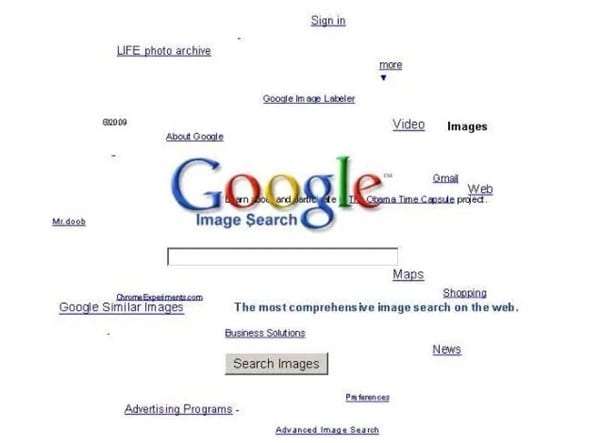
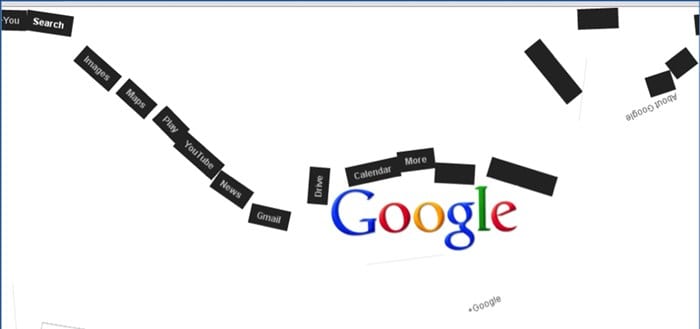
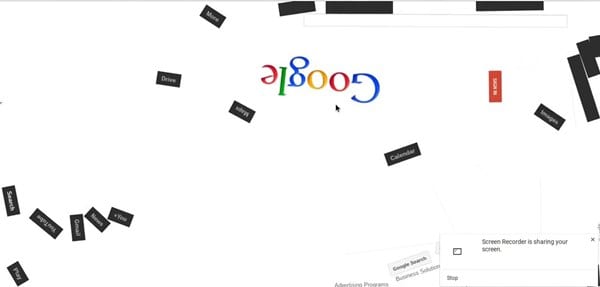
This is the first trick that amazed me as when I get to know this thing can happen when I was really surprised as it was quite funny. It is a standout amongst the most astonishing google gravity trap. In this trap, the substance will appear like tumbling to a level surface. Every one of the substances like pictures, writings, and so on of your page will be upset. They will look somewhat bouncy and turned around that looks exceptionally energizing and stunning.

#2 Google Sphere

Best Google Gravity Tricks That You Need To Try
This is second best google gravity trap. In this trap, the substance rotates in a round way. Be that as it may, you will think that its little hard to deal with it since you need to chip away at turning writings.

#3 Google Loco

Best Google Gravity Tricks That You Need To Try
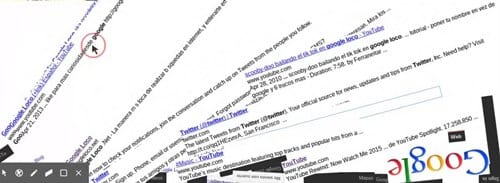
This google gravity trap is much like the google zero gravity. You will see the substance as falling in a seismic tremor,

#4 Zerg Rush

Best Google Gravity Tricks That You Need To Try
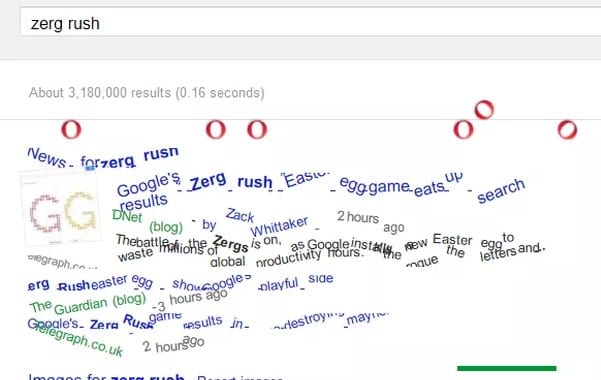
This is one of my most loved google gravity trap. In this deceive you will see somewhere in the range of zeros spreading in your page. to utilize this trap Open Google.com and hunt Zerg Rush through utilizing the search bar.

#5 Google submerged

Best Google Gravity Tricks 2018
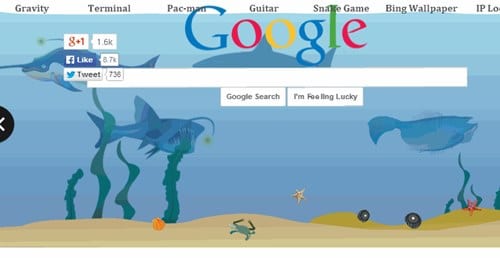
This is of the most attractive google gravity trap. In this deceive you will see a domain of submerged. You will see the pursuit bar coasting in the water.

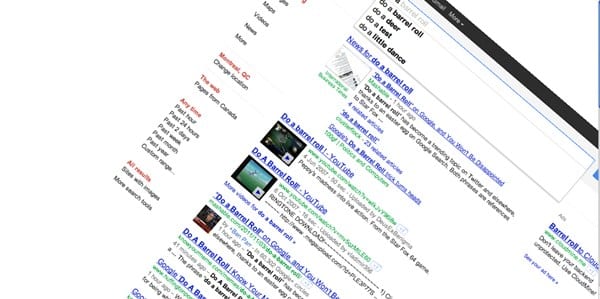
#6 Do a barrel roll

Best Google Gravity Tricks That You Need To Try
This is likewise an astounding google gravity trap. In this deceive, you will get an impact to your page with which, your page will turn in a solitary minute.

#7 Google Guitar

Best Google Gravity Tricks That You Need To Try
This is additionally a stunning google gravity trap. In this deceive, you can play guitar on the web index. You can play your coveted tunes with it. Google will give you notes to your tunes.

#8 Google zero gravity reversal

Best Google Gravity Tricks 2018
This is one of the coolest Google gravity trap. In this deceive, you will get a perfect representation of your site page. You will feel like you are on the opposite side of the screen.

#9 Google space

Best Google Gravity Tricks That You Need To Try
In this google gravity deceive you encounter a dream of the room. It implies that the substance of your page will appear like gliding noticeable all around with no gravitational power.

#10 Pacman

Best Google Gravity Tricks That You Need To Try
Best Google Gravity Tricks 2018 That You Need To Try
This is the standout amongst the most energizing google gravity trap. With this deceive, you can play Pacman game in this.
Finally, after reading this article, you have got to know about. We have tried to provide you this content in the simple and easy to read wordings and hope that you would have easily got about everything written up here. We believe that you might like this article and if it is what you think then please try to share it with others too. Your indulgence in our post is really valuable to us, so do not miss to write about your opinions and suggestions regarding this article through using the comments section below. At last but never the least thanks for reading this article!
Related posts
  1. El Mejor Hacker
  2. Hacking Programs
  3. Hacking Attacks
  4. Hacking Kali Linux
  5. Hacking Time
  6. Google Hacking Database
  7. Hacking Gif

Files Download Information


After 7 years of Contagio existence, Google Safe Browsing services notified Mediafire (hoster of Contagio and Contagiominidump files) that "harmful" content is hosted on my Mediafire account.

It is harmful only if you harm your own pc and but not suitable for distribution or infecting unsuspecting users but I have not been able to resolve this with Google and Mediafire.

Mediafire suspended public access to Contagio account.

The file hosting will be moved.

If you need any files now, email me the posted Mediafire links (address in profile) and I will pull out the files and share via other methods.

P.S. I have not been able to resolve "yet" because it just happened today, not because they refuse to help.  I don't want to affect Mediafire safety reputation and most likely will have to move out this time.

The main challenge is not to find hosting, it is not difficult and I can pay for it, but the effort move all files and fix the existing links on the Blogpost, and there are many. I planned to move out long time ago but did not have time for it. If anyone can suggest how to change all Blogspot links in bulk, I will be happy.


P.P.S. Feb. 24 - The files will be moved to a Dropbox Business account and shared from there (Dropbox team confirmed they can host it )  


The transition will take some time, so email me links to what you need. 

Thank you all
M

Related links


  1. Libro Hacking Etico
  2. Hacking Programs
  3. Aprender Hacking Etico
  4. El Hacker
  5. Phone Hacking
  6. Best Hacking Games
  7. Growth Hacking Cursos
  8. Hacking Tor Whatsapp
  9. Hacking Simulator
  10. Hacking Wikipedia
  11. Como Empezar En El Hacking
  12. Growth Hacking Pdf

CEH Practical: Information-Gathering Methodology


Information gathering can be broken into seven logical steps. Footprinting is performed during the first two steps of unearthing initial information and locating the network range.


Footprinting

Footprinting is defined as the process of establishing a scenario or creating a map of an organization's network and systems. Information gathering is also known as footprinting an organization. Footprinting is an important part of reconnaissance process which is typically used for collecting possible information about a targeted computer system or network. Active and Passive both could be Footprinting. The example of passive footprinting is assessment of a company's website, whereas attempting to gain access to sensitive information through social engineering is an example of active information gathering. Basically footprinting is the beginning step of hacker to get hacked someone because having information about targeted computer system is the main aspect of hacking. If you have an information about individual you wanna hack so you can easily hacked that individual. The basic purpose of information gathering is at least decide what type of attacks will be more suitable for the target. Here are some of the pieces of information to be gathered about a target
during footprinting:
  • Domain name
  • Network blocks
  • Network services and applications
  • System architecture
  • Intrusion detection system
  • Authentication mechanisms
  • Specific IP addresses
  • Access control mechanisms
  • Phone numbers
  • Contact addresses
Once this information is assemble, it can give a hacker better perception into the organization, where important information is stored, and how it can be accessed.

Footprinting Tools 

Footprinting can be done using hacking tools, either applications or websites, which allow the hacker to locate information passively. By using these footprinting tools, a hacker can gain some basic information on, or "footprint," the target. By first footprinting the target, a hacker can eliminate tools that will not work against the target systems or network. For example, if a graphics design firm uses all Macintosh computers, then all hacking software that targets Windows systems can be eliminated. Footprinting not only speeds up the hacking process by eliminating certain tool sets but also minimizes the chance of detection as fewer hacking attempts can be made by using the right tool for the job. Some of the common tools used for footprinting and information gathering are as follows:
  • Domain name lookup
  • Whois
  • NSlookup
  • Sam Spade
Before we discuss these tools, keep in mind that open source information can also yield a wealth of information about a target, such as phone numbers and addresses. Performing Whois requests, searching domain name system (DNS) tables, and using other lookup web tools are forms of open source footprinting. Most of this information is fairly easy to get and legal to obtain.

Footprinting a Target 

Footprinting is part of the preparatory pre-attack phase and involves accumulating data regarding a target's environment and architecture, usually for the purpose of finding ways to intrude into that environment. Footprinting can reveal system vulnerabilities and identify the ease with which they can be exploited. This is the easiest way for hackers to gather information about computer systems and the companies they belong to. The purpose of this preparatory phase is to learn as much as you can about a system, its remote access capabilities, its ports and services, and any specific aspects of its security.

DNS Enumeration

DNS enumeration is the process of locating all the DNS servers and their corresponding records for an organization. A company may have both internal and external DNS servers that can yield information such as usernames, computer names, and IP addresses of potential target systems.

NSlookup and DNSstuff

One powerful tool you should be familiar with is NSlookup (see Figure 2.2). This tool queries DNS servers for record information. It's included in Unix, Linux, and Windows operating systems. Hacking tools such as Sam Spade also include NSlookup tools. Building on the information gathered from Whois, you can use NSlookup to find additional IP addresses for servers and other hosts. Using the authoritative name server information from Whois ( AUTH1.NS.NYI.NET ), you can discover the IP address of the mail server.

Syntax

nslookup www.sitename.com
nslookup www.usociety4.com
Performing DNS Lookup
This search reveals all the alias records for www.google.com and the IP address of the web server. You can even discover all the name servers and associated IP addresses.

Understanding Whois and ARIN Lookups

Whois evolved from the Unix operating system, but it can now be found in many operating systems as well as in hacking toolkits and on the Internet. This tool identifies who has registered domain names used for email or websites. A uniform resource locator (URL), such as www.Microsoft.com , contains the domain name ( Microsoft.com ) and a hostname or alias ( www ).
The Internet Corporation for Assigned Names and Numbers (ICANN) requires registration of domain names to ensure that only a single company uses a specific domain name. The Whois tool queries the registration database to retrieve contact information about the individual or organization that holds a domain registration.

Using Whois

  • Go to the DNSStuff.com website and scroll down to the free tools at the bottom of the page.
  • Enter your target company URL in the WHOIS Lookup field and click the WHOIS button.
  • Examine the results and determine the following:
    • Registered address
    • Technical and DNS contacts
    • Contact email
    • Contact phone number
    • Expiration date
  • Visit the company website and see if the contact information from WHOIS matches up to any contact names, addresses, and email addresses listed on the website.
  • If so, use Google to search on the employee names or email addresses. You can learn the email naming convention used by the organization, and whether there is any information that should not be publicly available.

Syntax

whois sitename.com
whois usociety4.com

More articles

CEH: Gathering Network And Host Information, Types Of Scan


In Hacking the main focus is over gathering the information about victim or victim's machine. Which will help to find out which type of exploit will works according to the given circumstances. Gathering the network and host information means to find out by which network, the which victim's machine is connected and communicating over the network. Moreover, scanning is also performed for gathering information about open and closed ports. After that they'll able to find the vulnerabilities in the target system and try to get access to the system.

Types Of Scan

As a CEH you should know the scan types and uses:

SYN

SYN scan doesn't complete the TCP three way handshake that is why it is known as a half-open scan. An attacker send a SYN packet to the victim machine if SYN/ACK packet is received back to attacker, then it clarify that the port is listening due to the acknowledgment by the victim that it has completed the connection. While if the attacker is received the RST/ACK packet then it assumed that the port is closed or open.


XMAS

XMAS scan works only on target system that has the RFC 793 development of TCP/IP and it doesn't works against any version of windows.
XMAS scan send a packet with by setting up the FIN, URG and PSH flags of the TCP header. The function of this scan is if the port is active there will be no response but if the port is closed the target responds with a RST/ACK packet.


FIN

A FIN scan send a packet by setting up only the FIN flag of the TCP. This scan is similar to XMAS scan. FIN scan receives no response if the port is active while if the port is closed it receives the RST/ACK packet.


NULL 

NULL scan is also similar to the XMAS scan. But the only difference is that it sends a packet without setting up the any flag of TCP header. NULL scan receives no response if the port is open but if the port is closed it receives the RST/ACK packet.


IDLE

It is just like spoofing an IP address by sending a SYN packet to the victim's machine to find out which services are available over the system. This scan is completed with the help of another system called as "Zombie" (that is not receiving or transmitting any information).


Related articles

UserRecon Tool | Find Usernames | OSINT Tool

Related links